
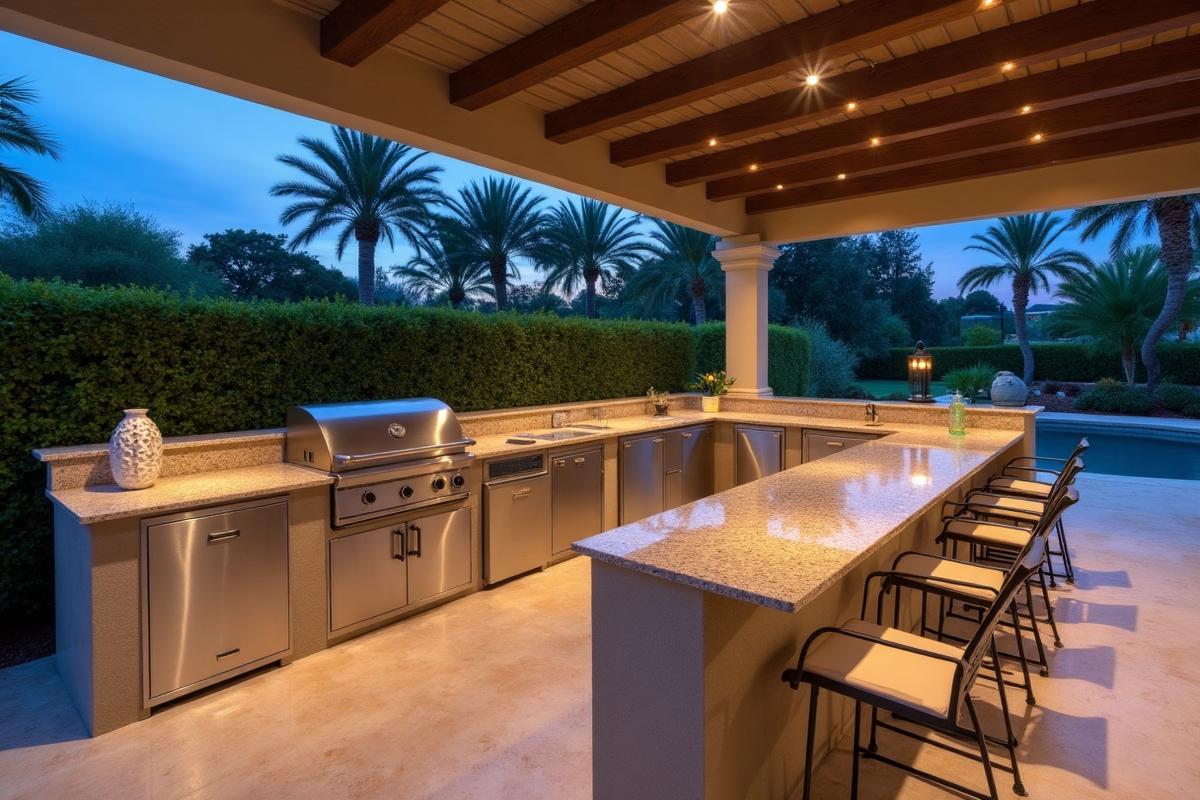
Outdoor kitchens are one of the most requested backyard features in Tampa Bay, and also one of the easiest to overbuild. The homes that get the best long-term return from an outdoor kitchen are almost always the ones that treat it as an extension of daily life, not a showpiece. This guide walks through what actually drives value in Tampa's climate, which features are worth the money, and how to size the project so it fits your home and your habits.
Lifestyle value versus resale value
Every outdoor kitchen has two returns. The first is lifestyle value, which is how often you actually use it, how much easier it makes entertaining, and how much time you spend outside instead of in the air conditioning. The second is resale value, which is what a future buyer is willing to pay above a comparable home without one. Tampa Bay homeowners consistently rate lifestyle value higher than resale, and the market data backs them up. Right-sized outdoor kitchens hold a meaningful portion of their cost at sale. Oversized ones on homes that do not otherwise support entertaining rarely do.
Features that consistently earn their keep
A few features show up in almost every outdoor kitchen that homeowners are happy with a year later. A quality built-in grill from a recognized brand with real BTU output, marine-grade stainless steel construction, and a proper hood or vent when placed under cover. Durable countertop material like granite or large-format porcelain that survives sun, rain, and cleaning without staining. Refrigeration under the roofline, which cuts trips inside dramatically and doubles the practical usefulness of the space. A comfortable seating position that lets the cook stay in conversation rather than turned to a wall.
Everything else is optional. Pizza ovens, kegerators, teppanyaki griddles, side burners, and specialty smokers all have their fans, but they should be added because you will actually use them, not because they might impress a future buyer. Every added appliance is another gas or electrical run, another warranty, and another surface to maintain.
Shade and cover matter more than size
Tampa Bay gets serious sun and serious rain, usually in the same afternoon. An outdoor kitchen without cover gets used less than one that is protected, no matter how much money went into the appliances. A pergola with a solid roof section over the cooking area, a lanai extension, or a proper covered outdoor room dramatically extends how often the space actually gets used. If the budget forces a choice between a bigger footprint and better cover, cover wins in this climate.
Placement decisions that pay off
Where the kitchen sits matters more than how big it is. Keep it close to the indoor kitchen so plates, ingredients, and cleanup do not require a long walk. Orient the cooking position so the cook is not facing directly into afternoon sun and the guests are not sitting in a bug or wind tunnel. Route utilities so the gas, electrical, and water lines take a clean path rather than a scenic one, which reduces cost and future maintenance headaches.
A compact well-placed kitchen consistently gets used more than a large kitchen positioned as an afterthought. Our team spends real time on layout before we get into appliance selection, and the difference at the end of the project is easy to see.
Materials that survive Florida
Tampa Bay humidity, sun, and coastal salt air punish materials that were not chosen for this climate. Marine-grade stainless steel, especially 304 grade or better, resists rust and pitting far longer than budget stainless. Porcelain and granite countertops handle heat, UV, and cleaning chemicals without staining. Sealed stucco or masonry cabinet fronts outlast MDF-based substrates. Sealed stone or porcelain tile flooring around the kitchen resists efflorescence and stays cleanable. Choosing the right materials up front is almost always cheaper than replacing them in five years.
Combining a kitchen with a pool project
The most efficient time to build an outdoor kitchen is during a pool project. Site work, permitting, electrical, and gas lines can be coordinated once instead of duplicated. Deck material can be selected as a single palette. Cover structures can be engineered to fit the whole space rather than retrofit around finished work. Adding a kitchen after a pool is complete is possible but often costs more per square foot because so much groundwork has to be re-opened. If a kitchen is on your five-year plan, the cheapest time to build it is when the pool is going in. Our Tampa Outdoor Living Guide walks through how we plan these projects together.
Planning a kitchen or full outdoor room?
Our team designs outdoor kitchens sized to your home, your entertaining habits, and Tampa's climate. See our outdoor living services.