The right pool features depend on your property, your budget, and how you actually plan to use the pool. There is no single list of features every Tampa Bay home should have. This guide walks through the options homeowners ask about most often in west-central Florida, explains where each one tends to add real value, and flags the situations where a feature may not be worth the cost. Use it as a planning checklist for early conversations with a builder or designer, not as a shopping list.
Sun shelves and tanning ledges
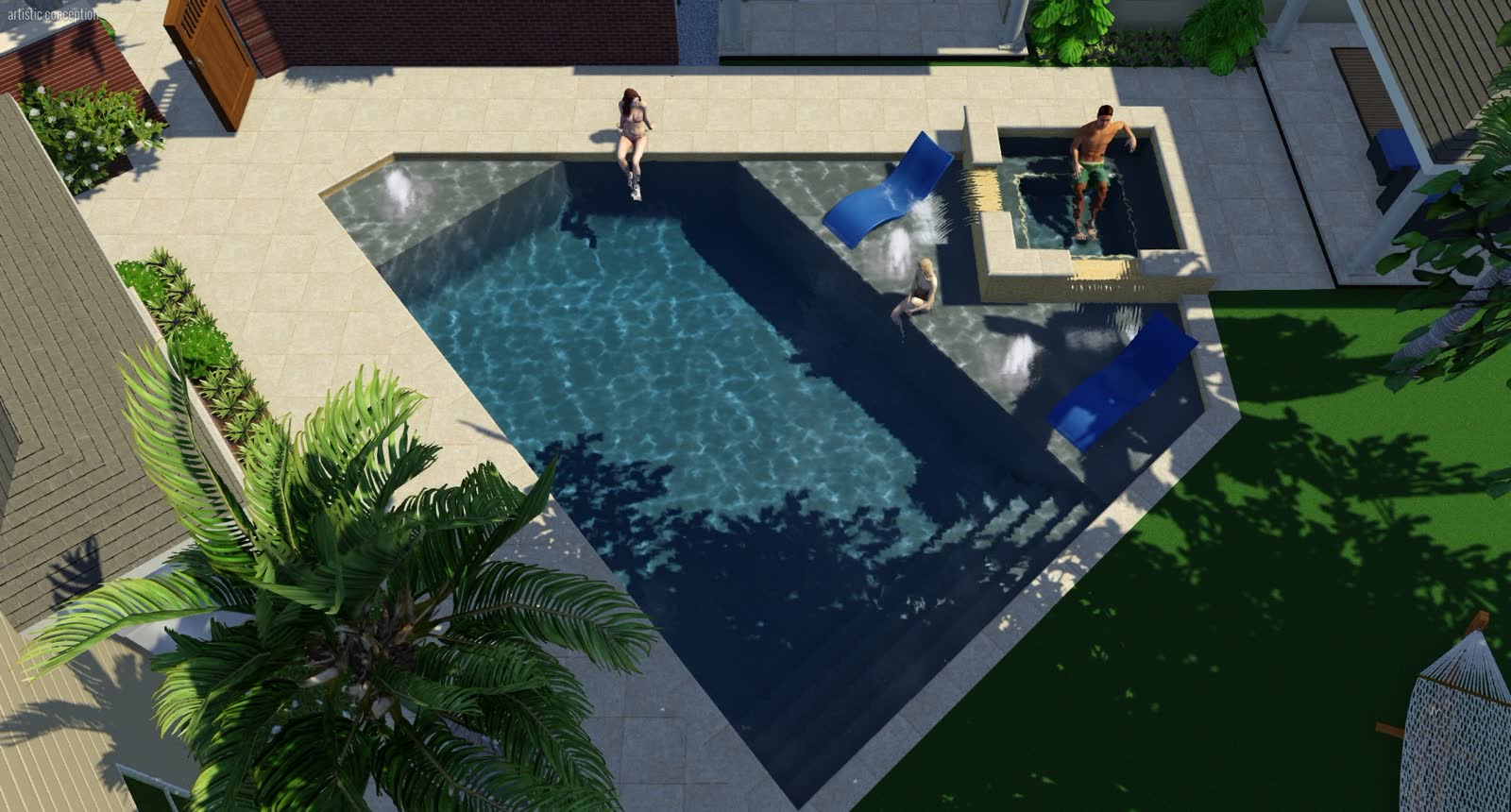
A sun shelf is a shallow, wide step at one end of the pool, usually four to nine inches deep. In Tampa Bay it is one of the most requested features, and for good reason. It doubles as a place for lounge chairs, a spot for young children to play under supervision, and a cool zone for adults on hot afternoons. Bubblers, umbrella sleeves, and integrated seating make the shelf more useful.
The tradeoff is footprint. A generous sun shelf can take up a meaningful portion of a smaller pool. On tight lots this is a real design decision, not a free upgrade. If space is limited, a smaller shelf with steps that double as seating can be a better balance.
Shade planning
Tampa Bay sun is intense from late spring through early fall. Planning shade at the same time as the pool tends to produce a much more usable backyard than adding it later. Options range from permanent structures like pergolas and covered lanais to lower-cost solutions like large market umbrellas set into the deck or sun shelf.
A common regret is finishing a pool and deck and only then realizing there is nowhere comfortable to sit at 2 pm in July. Even a simple umbrella sleeve cast into the deck or the shelf is an inexpensive detail during construction and hard to add cleanly afterward.
Screen enclosures
Screen enclosures are common in Tampa Bay for a reason. They cut down significantly on leaf debris, reduce many flying insects, and add filtered shade. They also make evening use of the pool and deck more comfortable in mosquito-heavy neighborhoods.
A screen enclosure is not a debris-free or bug-free guarantee. Fine pollen, wind-blown dust, and small insects still make their way through the mesh. The enclosure itself requires cleaning and eventual re-screening. On very open, exposed lots with good views, some homeowners deliberately skip the screen to keep sightlines. Both choices can be right depending on the property.
Pool heating
Even in Tampa Bay, water temperature drops during cooler months. If swimming in December, January, and February matters to you, plan for a heater. The two main options are gas heaters, which heat quickly and are best for on-demand use like a spa, and electric heat pumps, which are more efficient for maintaining pool temperature over long periods but slower to bring cold water up.
Heaters add equipment cost, ongoing energy cost, and maintenance. If you only plan to use the pool from April through October, a heater may not be worth the investment. If it is a maybe, plumbing and electrical stubs can be roughed in during construction so a heater can be added later at lower cost.
Spas and spillovers
Attached spas add year-round use and a strong design focal point. A spillover spa that shares pool water simplifies chemistry and looks great, but its temperature moves with the pool unless it is isolated. A dedicated spa with its own plumbing and heater is more flexible but more complex and more expensive. If you know you will use a hot spa weekly, plan for it during design. If use is uncertain, price it as an option rather than assuming it belongs in every project.
Automation and remote controls
Pool automation ties together the pump, heater, lighting, salt cell, water features, and often the spa. Most systems include a wall panel and a phone app. Automation is convenient and helps run equipment on efficient schedules, which can reduce wear and energy use over time. It is not required, but most homeowners who add it later wish it had been planned into the original electrical layout. If you think you might want automation eventually, running the conduit during construction is inexpensive insurance.
Saltwater chlorination
Salt chlorine generators are popular in Tampa Bay. Many homeowners prefer the feel of the water and the reduced handling of chlorine tablets. Salt systems are not maintenance-free. They require balanced chemistry, cell cleaning, and cell replacement every several years, and salt is corrosive to some metal components over time. They can be a great fit for many pools, but the tradeoffs are worth understanding before choosing.
Variable-speed pumps and LED lighting
Variable-speed pumps are now standard on new Florida pool construction and generally use less energy than older single-speed pumps for typical residential use. LED pool lights last much longer than older halogen lights and give you color and scene control. Both are usually easy to justify on new construction. Specific energy savings depend on your pool size, usage, and utility rates, so treat marketing percentages as rough guides rather than promises.
Water features
Sheer descents, deck jets, bubblers, scuppers, and rock waterfalls add movement, sound, and visual interest. They also add plumbing, another circuit, and maintenance. A single well-placed water feature is often more effective than several small ones competing for attention. Choose based on the sound and look you actually want, and plan the plumbing at design time rather than as a change order later.
Decking and surface temperature
Deck material matters more in Tampa than it does in cooler climates. Light-colored travertine, marble-look pavers, and certain concrete finishes stay noticeably cooler than dark tile or standard concrete in full sun. Slip resistance when wet also matters around a pool. Look at samples in sunlight, not just under showroom lights, before committing.
Drainage and deck runoff
Tampa summer storms can drop several inches of rain in a short window. Deck slope, downspout routing, and any perimeter drain need to move water away from the house and from pool equipment. Good drainage is invisible when it works and expensive to retrofit when it does not. This is not a glamorous feature, but it is one of the highest-value planning items in a Tampa Bay backyard.
Equipment placement
Where the pump, filter, heater, and salt cell live affects noise, sightlines, service access, and long-term equipment life. A shaded or partially shaded equipment pad tends to outlast one in full sun. Enough clearance for a technician to work matters at service time. It is worth walking the proposed equipment location on paper before the pad is poured.
Safety barriers, alarms, and covers
Florida requires a residential pool safety barrier, which in most Tampa Bay homes is satisfied by a screen enclosure, a compliant perimeter fence, or approved door alarms and self-closing latches. Beyond code, families with young children often add a removable mesh safety fence around the pool itself and consider a safety cover for extended periods away. Confirm your jurisdiction's current barrier requirements with your builder before finalizing the plan.
Outdoor kitchens and seating
A modest outdoor kitchen with a grill, prep counter, and small refrigerator gets used more than a large elaborate one in most Tampa Bay backyards. Size it to how you actually entertain, plan for shade over the cooking area, and think about proximity to the indoor kitchen for load-in and cleanup. An outdoor kitchen is easier to plan alongside the pool than to add three years later around a finished deck.
Homeowner planning checklist
- Who will actually use the pool, and when during the year?
- Is winter swimming worth the cost of a heater?
- Do you value open sightlines, or is a screen enclosure important?
- How much shade do you want on the deck and sun shelf?
- Do you entertain often enough to justify an outdoor kitchen?
- What is your comfort level with equipment maintenance?
- Which features are must-haves, and which can be pre-wired and added later?
Questions to ask before moving forward
- Which of these features are already included in the proposed budget, and which are add-ons?
- What do the equipment brands, warranties, and expected service intervals look like?
- Where will the equipment pad sit, and how much shade will it get?
- How will deck drainage move water during a summer storm?
- Which items can be roughed in now and finished later at lower cost?
- Which features would you personally cut first if the budget got tight?
Want a plan that fits your property?
We build custom pools across Tampa Bay on an open-book cost-plus model, so you can see how each feature affects your budget before you commit. Learn more about Tampa pool construction or request a budget review.
Related reading
- Tampa pool builder overview
- Tampa Bay pool builder hub
- Tampa Bay 3D pool design
- Tampa Bay pool cost guide
- Pool permits in Tampa Bay
- Building a pool in Tampa's climate
- Featured projects