South Tampa has some of the most sought-after neighborhoods in the Bay area and some of the most constrained lots. Many South Tampa properties have limited side-yard access, mature landscaping, existing patios and additions, and setbacks that shape what is physically possible. That does not mean a pool is out of reach. It means the planning work matters more than it does on a wide-open suburban lot. This guide walks through the questions worth answering before you finalize a design, so the pool you build actually fits your property, your budget, and how you plan to use the space.
Start with a current survey
A current signed and sealed survey is the foundation of every South Tampa pool project. It shows lot lines, easements, existing structures, and elevations. If your last survey is old or does not reflect current additions, fences, or accessory structures, plan for a new one before design gets serious. Trying to design a pool against an outdated survey almost always produces surprises later.
A survey also flags utility easements that can quietly consume usable backyard space. On some South Tampa lots, a drainage or utility easement runs across an area that looks perfectly buildable from the yard. Knowing that early avoids designing around a pool location that never had a chance of being approved.
Setbacks and buildable area
Pool setbacks in South Tampa depend on which jurisdiction reviews your permit and on any zoning overlays that apply to your property. Historic districts, waterfront lots, and specific neighborhoods can layer additional requirements on top of the base rules. Requirements also change over time.
Rather than working from memorized numbers, treat setback confirmation as a specific step in early planning. Your builder or designer should verify current requirements with the relevant jurisdiction against your survey before locking in a pool location. This is one of the fastest ways to catch a problem while it is still cheap to fix.
Excavation and equipment access
Access is often the single biggest planning issue on a South Tampa lot. Narrow side yards, mature trees, existing patios, shared driveways, and fenced properties all affect how excavators, dump trucks, shotcrete pumps, and delivery vehicles reach the pool site. On some lots, a fence section will need to come down temporarily. On others, landscaping will need protection or short-term relocation.
In tighter cases, smaller equipment, hand digging in specific areas, or alternate staging plans may be required. All of this is workable, but it costs time and money. It is much better to price it accurately before construction than to discover it during dig week.
Existing features and structures
Existing patios, garages, additions, accessory dwelling units, screen enclosures, irrigation, and outdoor lighting all shape what is possible. Some existing hardscape may be reused, some will need to be removed, and some may constrain the pool layout in ways that only become clear once it is measured. Walking the property with your builder, survey in hand, is the fastest way to align on what stays, what changes, and what needs to be worked around.
Utility locations and equipment placement
Gas lines, water service, electrical panels, air conditioning condensers, and irrigation controllers all need to be located before pool equipment placement is finalized. Pool equipment produces some noise and needs service clearance. Setting it against a bedroom wall or crowded against a neighbor's yard is a decision worth revisiting rather than a default.
On smaller lots, equipment placement is often a compromise between service access, noise, sightlines, and code clearances. Getting it right the first time is easier than moving equipment after the pad is poured.
Drainage, grading, and the water table
South Tampa summer storms can drop heavy rain quickly. On a compact lot, deck slope, downspout routing, and grading around the pool matter more than on a large open yard, because there is less room to absorb runoff. Parts of South Tampa also sit on high water tables, which affects dewatering during excavation and how the pool structure is engineered. Both of these are site-specific and should be evaluated on your property rather than assumed based on a nearby build.
Flood zone and elevation review
Some South Tampa properties fall in FEMA-designated flood zones. Flood zone status can affect equipment elevation, deck elevation, and other decisions. If your property is in or near a mapped flood zone, an elevation certificate and jurisdiction-specific review are worth doing early. This article is a planning overview, not property-specific flood advice. Confirm your address with a licensed surveyor or your building department.
Compact pool shapes and smaller layouts
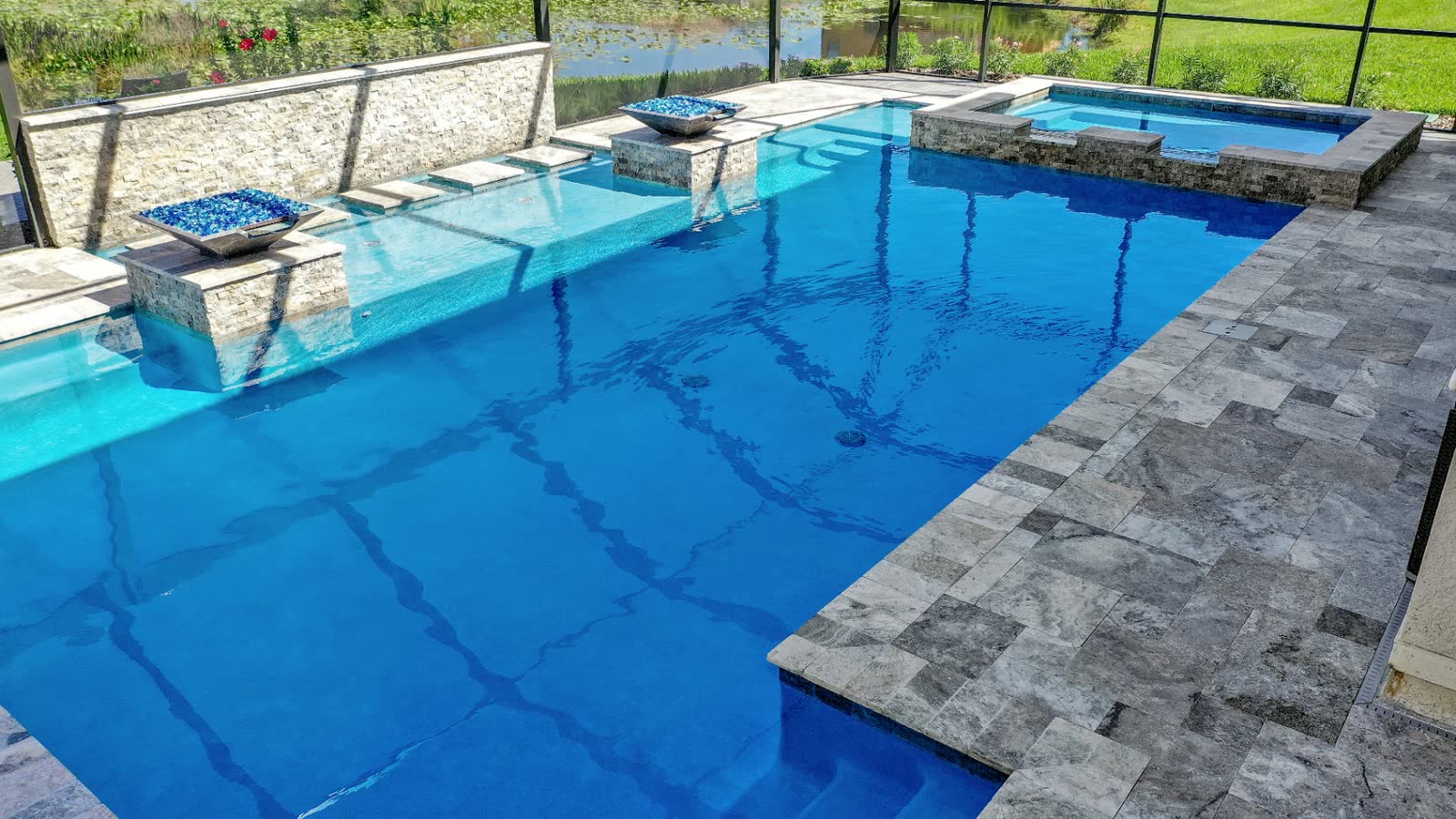
On a genuinely tight lot, a smaller pool, a plunge pool, or a spool can deliver most of the enjoyment of a larger pool with much less impact on the yard. Rectangles and geometric shapes generally fit better on urban lots than free-form curves. Sun shelves, steps that double as seating, and a small bench built into the shell can add usable space without expanding the footprint.
There is nothing second-best about a well-designed compact pool. Many of the most functional South Tampa backyards are built around smaller pools with generous, well-shaded deck space rather than large pools that consume the yard.
Screen enclosure footprint
If you want a screen enclosure, its footprint needs to be planned at the same time as the pool. Enclosures often extend further than the deck alone and can bring you closer to setbacks or existing structures than you would expect. Some homeowners choose to skip the enclosure on tighter lots to keep sightlines open. Both choices are valid, but the decision should be made with a real drawing rather than assumed.
Construction staging and neighbor considerations
Pool construction on a South Tampa lot usually involves several weeks of active work with equipment, material deliveries, and multiple trades. Where crews park, where materials stage, and how the site protects driveways, irrigation, and neighboring property all belong in the plan. Talking to neighbors early about noise, access, and any shared fence work goes a long way. Keeping the site tidy each day and communicating the schedule reduces friction over the life of the project.
How cost-plus construction helps on tight sites
Tight lots tend to generate real costs for access, protection, extra site work, and drainage. On a fixed-bid contract, those costs are bundled into a single number and it is difficult to see how they were estimated. On an open-book cost-plus model, the vendor and subcontractor invoices for those items are visible line by line, which makes it easier to understand tradeoffs as the design evolves. This is not a guarantee that any specific project will be less expensive under cost-plus. It is a way to have clearer conversations about where the money is going.
Homeowner planning checklist
- Do you have a current signed and sealed survey?
- Have setbacks and easements been confirmed with the correct jurisdiction?
- Has excavation and delivery access been walked with your builder?
- Do you know where existing utilities and equipment sit?
- Has drainage been evaluated for your specific lot?
- If applicable, has flood zone and elevation been reviewed?
- Have you priced a smaller pool option alongside your first choice?
Questions to ask before moving forward
- Who is responsible for confirming setbacks and easements against my survey?
- How will excavation equipment reach the backyard, and what protection is included?
- Where will pool equipment sit, and how much service clearance will it have?
- How will site drainage handle a heavy summer rain?
- What are the site-specific line items I should expect on my project?
- How are cost overruns handled when unexpected site conditions come up?
Thinking about a pool in South Tampa?
We plan and build cost-plus custom pools across South Tampa neighborhoods. Learn about our South Tampa work or request a budget review.
Related reading
- South Tampa pool builder
- Tampa pool builder overview
- Tampa Bay pool builder hub
- Tampa Bay 3D pool design
- Tampa Bay pool cost guide
- Pool permits in Tampa Bay
- Avoid costly change orders
- Featured projects